Systems
The Power of Simplification: Lessons from Spacecraft Design
The Space Shuttle had 2,000 switches and stopped flying. The Soyuz had 63 and still flies. The most enduring systems keep only what is necessary.
This is the fourth installment in a series on first-principles thinking. The series works through six ideas: question every requirement, make requirements less dumb, delete unnecessary parts, simplify and optimize, accelerate cycle time, and automate last. This piece is about the third — deleting unnecessary parts.
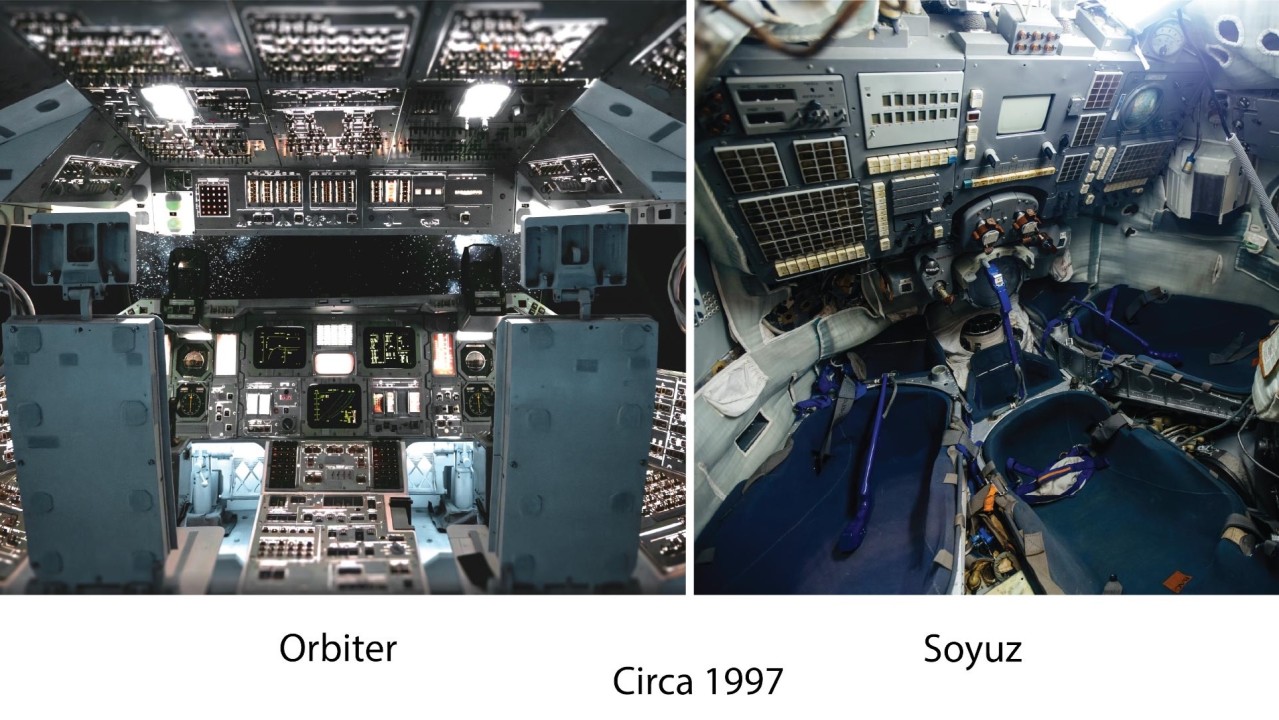
The hidden cost of complexity
Most systems, businesses, and products accumulate unnecessary complexity over time. There is a natural tendency to assume that more is better — more features, more processes, more controls. But complexity comes at a cost: it slows execution, increases failure points, and introduces unnecessary friction.
This is especially evident in aerospace engineering, where mission success depends on minimizing failure points. One of the starkest contrasts in design philosophy can be seen in the difference between the Space Shuttle Orbiter and the Soyuz spacecraft — two vastly different approaches to solving the same problem: getting humans safely to and from space.
I always loved the Orbiter and all of its complexity — there was something fascinating about its intricate design and vast capabilities. But in the end, that complexity came with trade-offs. I remember the first time I saw the inside of the Soyuz while working at Johnson Space Center — I was taken aback by how sparse and simple it was. Compared to the Orbiter, which had an overwhelming array of switches, dials, and backup systems, the Soyuz felt almost minimalist. But that simplicity had its advantages.
While working at NASA’s Mission Operations Directorate and Crew Operations, the contrast between these spacecraft became even more apparent. The Shuttle’s complexity required extensive training and meticulous procedures, while the Soyuz’s simplicity made it more intuitive and reliable.
The Space Shuttle: ambition meets complexity
The Space Shuttle Transportation System was an engineering marvel. Designed as a reusable spacecraft, it was meant to carry astronauts, satellites, and even space station modules into orbit. But this ambition came with an immense level of complexity.
The Orbiter featured over 2,000 switches in its cockpit, requiring extensive astronaut training and increasing the likelihood of human error. Its complexity resulted in high maintenance costs, lengthy turnaround times, and increased risk of failure. It wasn’t nearly as “reusable” as intended — designed for a two-week turnaround, it in reality required six to twelve months of spot fixes and refurbishments each time. The Shuttle had backup systems, and sometimes backups to those backups, increasing redundancy but also adding layers of complexity that required continuous maintenance. Despite its innovations, the program was ultimately retired due to unsustainable operational costs and safety concerns.
The lesson? Complexity for the sake of capability is often a liability.
The Soyuz: embracing simplicity for reliability
In contrast, the Soyuz spacecraft, first flown in 1967, has remained in continuous use for over 50 years with minimal design changes. Unlike the Shuttle, which attempted to be a multi-purpose vehicle, the Soyuz focused on one mission: ferrying astronauts safely to and from orbit.
In 1997, when I was working with it, the Soyuz cockpit had only 63 switches — a stark contrast to the Orbiter’s 2,000-plus. Its simpler design reduces potential failure points, making it more reliable and easier to operate. The Soyuz is still in use today, while the Shuttle was retired in 2011.
Despite lacking the cargo capacity of the Shuttle, Russia still launched critical components of the International Space Station using Proton and Soyuz rockets. The Zarya module, the first component of the ISS, launched aboard a Proton-K in 1998 without relying on the Shuttle. Subsequent modules — Zvezda, Poisk, Nauka, Prichal — also launched on Russian vehicles, proving that a streamlined, single-purpose system could still accomplish major orbital milestones.
The key takeaway? The most enduring and successful systems are not the most complex, but the ones with only what is necessary.
The first principle: delete unnecessary parts
Before optimizing a system, first ask: what can be removed? Every additional feature, control, or process adds friction, cost, and potential failure points. Before improving a system, the first step should be eliminating unnecessary complexity. If a part or step does not directly contribute to the mission, it should be removed.
Applying this to business and life
This principle extends far beyond aerospace.
- Product development. Many tech companies add features instead of focusing on core functionality. Apple’s success has come from removing complexity and focusing on intuitive design.
- Operations and management. Companies often implement excessive approval processes, unnecessary meetings, and redundant workflows, all of which slow execution. The best organizations cut bureaucracy to move faster.
- Personal productivity. Many people try to optimize by adding more tools and systems when the real solution is removing distractions and non-essential tasks.
Practical steps to simplify
- Ask: if we removed this, what would break? If the answer is “nothing,” it’s unnecessary.
- Identify complexity creep. If a process, rule, or feature has grown over time without a clear reason, reconsider it.
- Prioritize simplicity. The best solutions are often the simplest.
- Continuously remove friction. What worked yesterday may be unnecessary today. Always reassess.
The most successful systems are simple
The Space Shuttle was more advanced than the Soyuz, yet it no longer flies. The Soyuz, with its simpler and more reliable design, continues to operate after more than five decades.
The lesson is clear: complexity is often a failure of understanding. The best systems, products, and companies succeed not by adding more but by removing what is unnecessary.
Actionable takeaway: identify one system in your work or life that has become too complex. What can you remove today?