Incentives
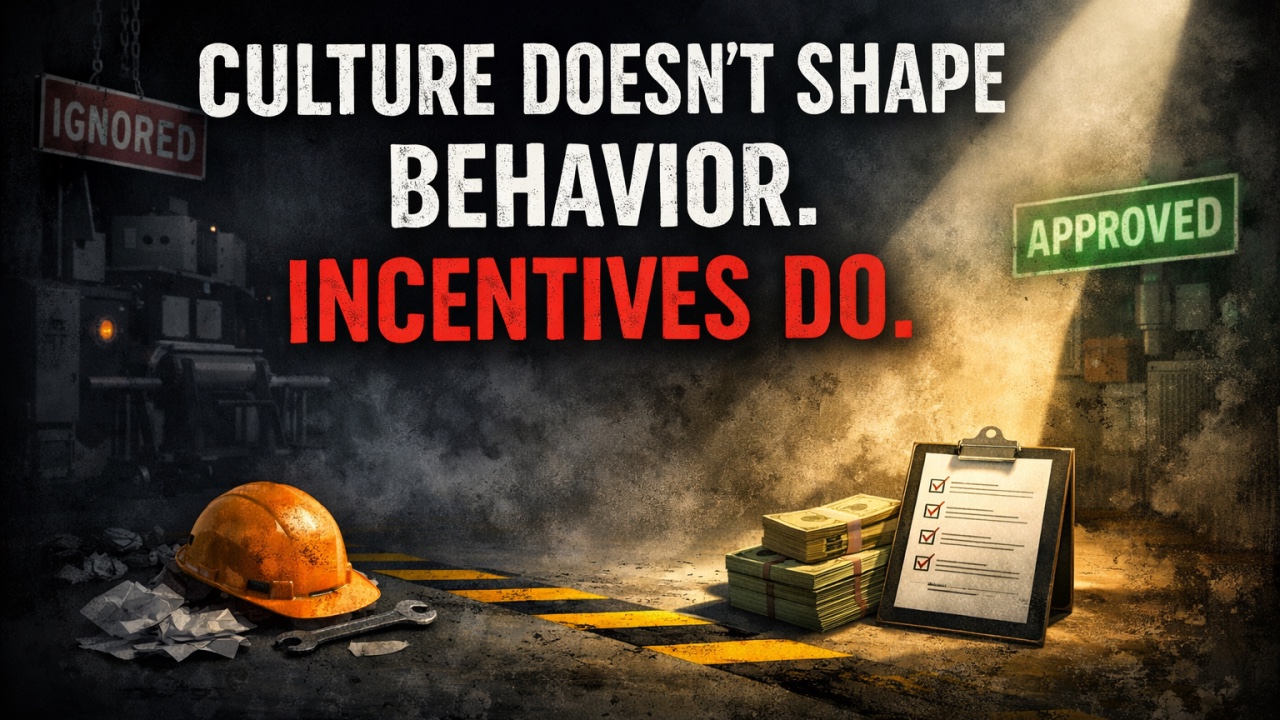
Culture Doesn't Shape Behavior. Incentives Do.
We praise Toyota's culture because it lets us pretend the magic was mindset. It wasn't. Toyota engineered consequences, and the culture showed up as a byproduct.
We love praising Toyota’s “culture.”
That framing is comfortable. It lets us pretend the magic was mindset. Calm reactions to failure. Psychological safety. Ruthless root-cause obsession. Zero tolerance for bullshit explanations. Outsiders look at that and think: if only we had that mindset.
Dead wrong.
Toyota didn’t start with mindset. Toyota engineered consequences. Systems where hiding problems costs you. Where surfacing problems protects you. Where leaders pay a price for defects they missed or ignored. Do that relentlessly, and the “culture” everyone admires shows up as a byproduct.
The part almost every company gets wrong
Each of those steps is exponentially harder than the last.
Most organizations nail the easy part: hiding problems is punished. Far fewer reach surfacing problems is rewarded. Almost none ever makes leaders feel real heat for problems they didn’t anticipate.
Stopping early is worse than doing nothing. Punishment without protection teaches people to hide better. Rewards without leadership accountability turn escalation into career suicide. The system trains silence, brutally and efficiently.
The culture is downstream
Toyota doesn’t have great processes because it has a great culture. It has a great culture because it designed processes that bite.
Problems surface early because ignoring them is expensive. Accountability flows upward because dodging it is embarrassing. In that world, speaking up isn’t courageous. It’s just the rational, safest move. Over decades, those repeated rational choices become what outsiders mistakenly call “culture.”
Most companies copy the vocabulary — psychological safety, empowerment, transparency — while dodging the hard part: rewiring incentives, shifting real authority, tolerating short-term pain. So they get the branding without the results.
Toyota didn’t breed superhuman employees. It built conditions where the right behavior was inevitable and the wrong behavior painful. Until escalation is demonstrably safer than compliance, “culture” is just the fairy tale we tell ourselves to avoid changing the system.
What incentive in your organization actually drives behavior today — whether leadership admits it or not?